

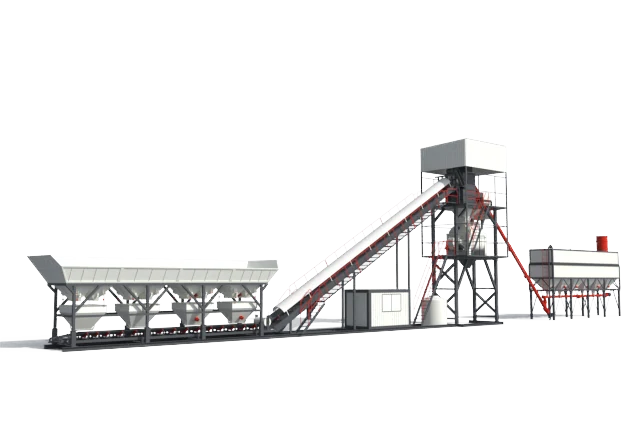
Concrete Batching Plants
Foundation-Free Concrete Batching Plant
MHZS90, MHZS120 and MHZS180: steel-base plant configurations with listed productivity of 90–180 m³/h and belt aggregate feeding.
- MHZS90 / MHZS120 / MHZS180
- 90–180 m³/h listed productivity
- Four independently weighed aggregate bins
Model data is supplied by the client. Configuration and operating conditions need confirmation for your order.
Overview
A foundation-free concrete batching plant is worth considering when a project needs a dedicated concrete production point but the civil-work arrangement of a conventional fixed plant is not a good fit. The installation must still be designed around the site, its ground conditions and the selected equipment.
The EPDAS MHZS range includes MHZS90, MHZS120 and MHZS180 configurations with listed productivity of 90, 120 and 180 m³/h. The documented structure combines a mixing-platform steel frame with a free-base steel frame. Belt conveyors, four aggregate compartments and separate weighing systems form part of the model comparison.
The foundation-free description refers to the plant arrangement. It does not mean that uneven ground, poor drainage or an unverified support surface can be ignored. Evaluate the complete installation before deciding whether this configuration suits the project.
Select the MHZS Configuration Around Material Flow
Compare Storage and Feeding Together
The three models use four aggregate compartments, with storage entries increasing from 4 × 8 m³ to 4 × 12 m³ and 4 × 20 m³. The corresponding conveyor arrangements also differ. Larger storage may help accommodate replenishment, but the loading area and material deliveries must support it.
Check the Waiting-Hopper Arrangement
The source lists no aggregate waiting box for MHZS90 and a waiting box for MHZS120 and MHZS180. This difference should be considered alongside the mixer and conveyor sequence. Do not assume that every MHZS model has the same intermediate storage arrangement.
EPDAS MHZS Model Specifications
Compare the complete model columns below. Listed productivity, power, dimensions and storage capacities describe the supplied configurations; they do not establish a guaranteed daily output or the total land required for a working yard.
| Model | MHZS90 | MHZS120 | MHZS180 |
|---|---|---|---|
| Central mixing console | JS1500 | JS2000 | MAO3000 |
| productivity | 90 cubic meters /hour | 120 cubic meters /hour | 180 cubic meters /hour |
| Main structure | Mixing platform steel frame + free base steel frame | Mixing platform steel frame + free base steel frame | Mixing platform steel frame + free base steel frame |
| Aggregate Storage | 4 boxes * 8m3 | 4 boxes* 12m3 | 4 boxes* 20m3 |
| Aggregate feed type | Belt conveyor (B=800mm, 22kw) | Belt conveyor (B=1000mm, 37kw) | Belt conveyor (B=1000mm, 45kw) |
| Aggregate waiting box | No | Yes | Yes |
| Aggregate weighing system | 4 sets (independent) | 4 sets (independent) | 4 sets (independent) |
| Cement weighing system | 2 sets (+ physical dust collector) | 2 sets (+ Electrostatic precipitator) | 2 sets (+Pulse dust collector) |
| Water weighing system | 1 Set (+1.5m3 plastic water tank) | 1 Set (+10m3 steel plate water tank) | 1 Set (+10m3 steel plate water tank) |
| Liquid Additive Weighing System | 1 Set (+2m3 plastic liquid tank) | 1 Set (+4m3 plastic liquid tank) | 2 sets (+8m3 plastic liquid tank) |
| Stirring power | 2*30kW | 2*37 kW | 2*55kW |
| Total Power | 113 kW | 136 kW | 200 kW |
| Dimensions | 30m*4m*10m | 36m*4.2m*12m | 46.5m*4.3m*13m |
| gross weight | 28 tons | 35 tons | 42 tons |
| Overall shape | The entire factory is lined up in a row, with free basic design. | The entire factory is lined up in a row, with free basic design. | The entire factory is lined up in a row, with free basic design. |
Figures describe the documented model configurations. Theoretical productivity is not guaranteed operating output; confirm the selected configuration and conditions for your order.
Main Systems and Their Roles
Mixing Platform and Steel Base
The supporting frames establish the equipment arrangement. Their positioning, bearing surfaces and connections need approved installation details for the selected site.
Mixer and Ingredient Dosing
The model schedule pairs MHZS90 with JS1500, MHZS120 with JS2000 and MHZS180 with MAO3000. Four independent aggregate weighing sets are listed, together with cement, water and additive systems. Review these as a coordinated production package rather than isolated components.
Storage and Supporting Equipment
Water and liquid-storage entries vary by model. Powder storage, transfer equipment and the final dust-handling arrangement must also be checked against the order scope. Different source descriptions should not be treated as interchangeable standard accessories.
How a Foundation-Free Mixing Plant Operates
A typical central-mixing sequence begins with separately stored aggregates and available cementitious materials, water and admixtures. Ingredients are measured against the selected mix design, then transferred to the mixer through their respective systems.
The belt conveyor carries aggregate towards the mixer charging position. Where a waiting hopper is included, its operation must be coordinated with the batch sequence. The mixer combines the ingredients before the concrete is discharged to the receiving equipment.
This describes the general production principle. Charging order, interlocks, inspections and operator actions must follow the documentation for the installed configuration.
Match Production Capacity to the Entire Site
An MHZS productivity figure is useful for comparing models, but material replenishment and concrete removal can limit actual production. A plant can be ready to mix while waiting for aggregate, a tanker delivery or an available receiving vehicle.
Consider sustained demand as well as peak requirements. Loading space, maintenance periods, changes of recipe and concrete delivery arrangements all affect the working schedule. A larger model is useful only when the supporting operation can use its capacity.
Keep Material Control Consistent
Check that aggregate fractions remain separated and that the weighing systems are maintained. The presence of independent scales does not replace calibration checks or a producer's quality procedures.
Aggregate moisture changes must be considered when determining batch water and material quantities. Record recipe adjustments and review the resulting concrete through the project's testing process. Automatic moisture measurement or reporting functions should be specified separately if required.
Applications and Project Fit
Dedicated Project Production
A project with sustained demand may assess this layout as an alternative to a conventional stationary arrangement. The decision should consider the construction programme, site access and the cost of preparing and later restoring the production area.
Concrete Supply with Planned Future Changes
Where the production point may change later, review how the frames and associated equipment would be dismantled, moved and recommissioned. The steel-base arrangement alone does not establish a particular relocation time or lifting method.
Ground Preparation and Installation Planning
Confirm ground bearing capacity, levels, drainage, equipment support points and access before installation. The correct preparation depends on the actual site assessment and equipment drawings; there is no universal promise of installation on bare soil.
The dimensions in the model table describe the supplied plant arrangement. Add the space needed for stockpiles, vehicle circulation, cement deliveries, washout and maintenance. Reserve safe access around the supporting structure and conveyor route.
Dust and Water Arrangements
Review dust handling at powder transfer and material charging points. The source includes model-specific dust-collector descriptions, which need clarification against the final equipment package and local requirements.
Plan wash-water collection and drainage at the same time as ground preparation. Preventing standing water and accumulated spillages helps keep the production area workable. Environmental compliance must be assessed for the actual installation.
Commissioning and Maintenance
Commissioning should verify the assembled frames, conveyors, weighing systems, controls and discharge arrangements. Trial production should follow approved procedures and concrete quality checks before routine supply begins.
Routine care includes mixer cleaning, inspection of wear parts, conveyor checks and attention to weighing equipment. Agree the installation assistance, training, spare parts and support scope with EPDAS for the individual order.
Consider the Complete Project Cost
Compare the equipment package with site preparation, utilities, lifting work, transport and commissioning. A foundation-free arrangement may change how civil works are organised, but the project cost cannot be judged from the base-frame description alone.
Where future relocation matters, include disassembly, loading, transport and reassembly in the comparison. Confirm the work and equipment needed at both the current and future sites.
Frequently Asked Questions
Does foundation-free mean no ground preparation?
No. Ground bearing conditions, levels, drainage and support requirements still need verification against the selected installation drawings.
Which MHZS models are available in the supplied range?
The documented range contains MHZS90, MHZS120 and MHZS180, with listed productivity of 90, 120 and 180 m³/h respectively.
How are aggregates transferred to the mixer?
The supplied MHZS configurations use belt conveyors. Conveyor width and power differ by model and appear in the specifications.
Do all three models have an aggregate waiting hopper?
No. The table lists no waiting box for MHZS90 and a waiting box for MHZS120 and MHZS180.
How many aggregate weighing systems are listed?
The source lists four independent aggregate weighing sets for each of the three configurations.
Can the plant be relocated later?
Assess relocation using the equipment drawings and a defined dismantling, lifting and transport plan. A specific relocation period is not established by the model table.
Do the listed dimensions equal the required site area?
No. The complete site also needs space for storage, vehicle movements, servicing, utilities and water management.
Is listed productivity a guaranteed operating result?
No. Actual production depends on the concrete recipe, batch sequence, material replenishment, receiving equipment and operating conditions.
Is the dust-collection package identical on every model?
The source descriptions differ. Confirm the exact collector type, connections and scope for the selected model and project.
What support is included with an order?
Installation assistance, training, parts, warranty and technical support are agreed for the order. They should be defined before delivery.
Manufacturing & product evidence
EPDAS identifies specialized manufacturing bases for the relevant equipment families.
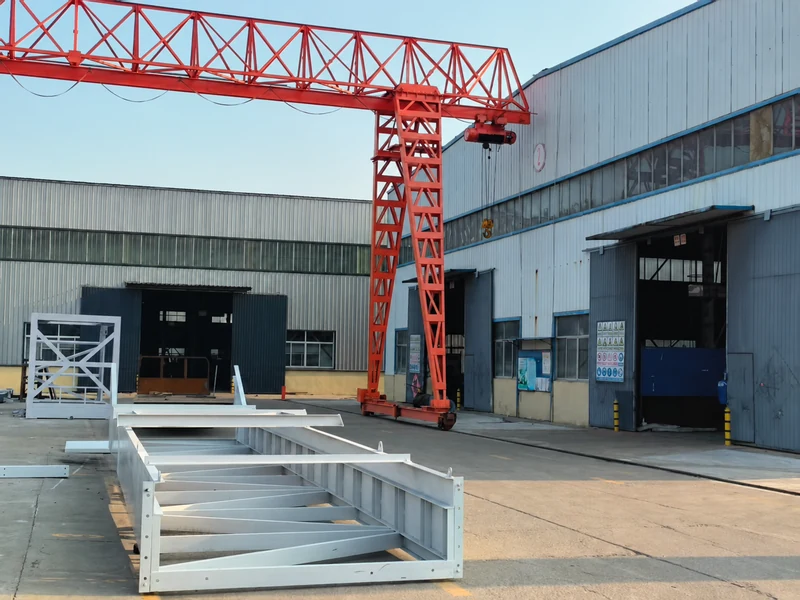
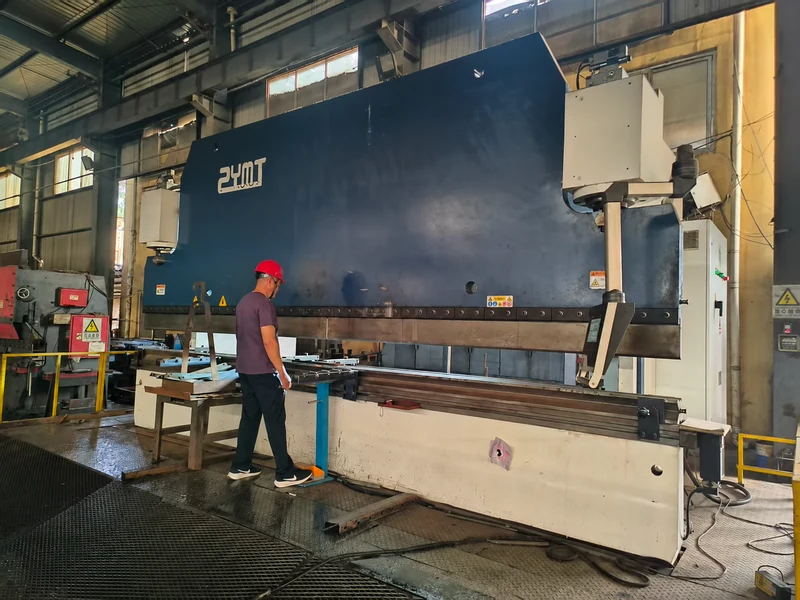
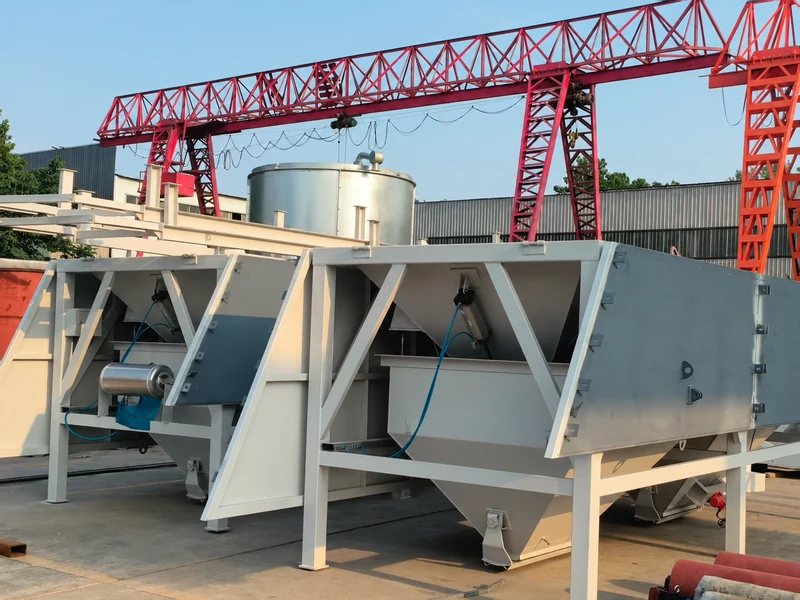
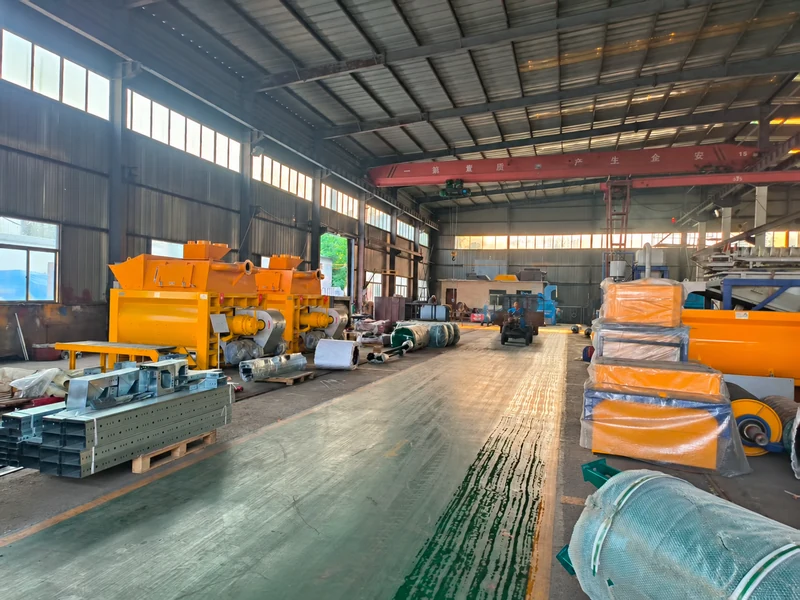
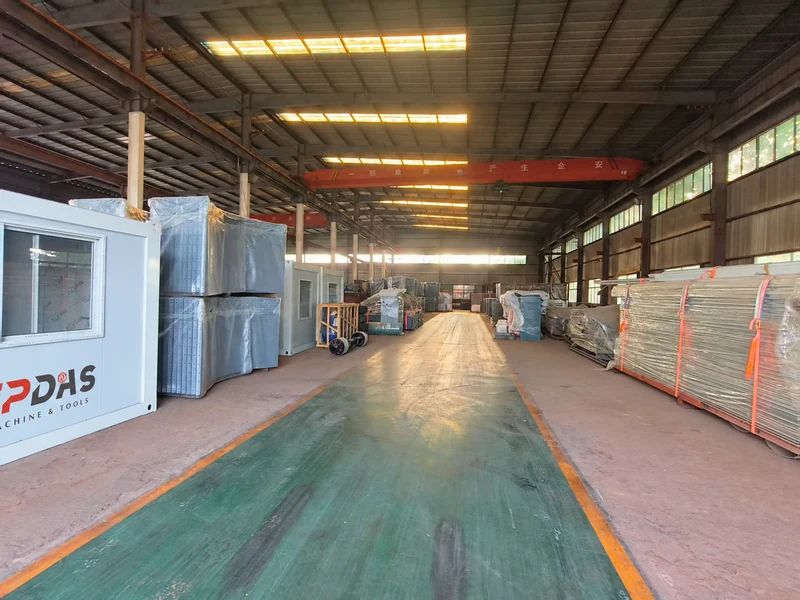
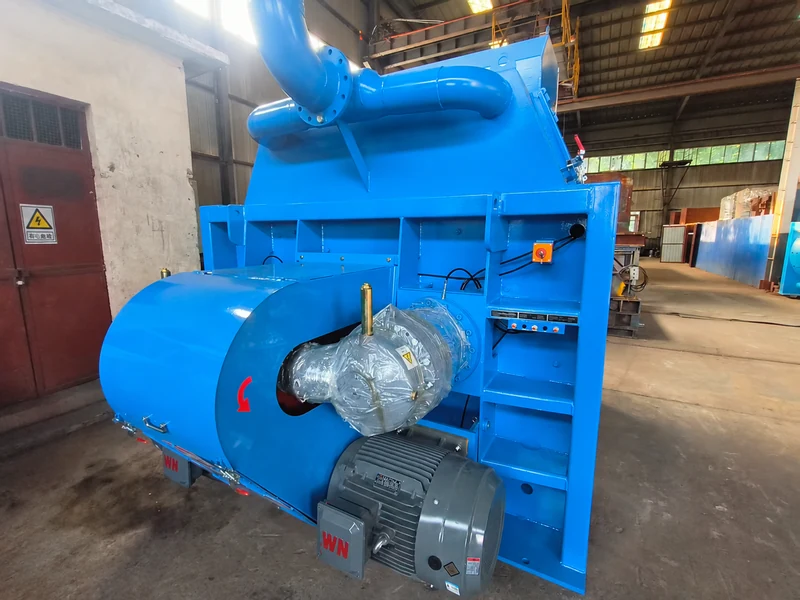
Pending confirmation. Model-specific inspection and certification evidence remains to be confirmed.
Discuss Your MHZS Plant Configuration with EPDAS
Compare the MHZS frame, storage and feeding arrangements against your intended production site. EPDAS can discuss the documented options and clarify the installation and supply scope for your project.
Discuss Your Plant Configuration